1/21/2018

3RD SUNDAY IN ORDINARY TIME (YEAR B)


Jonah 3:1-5, 10; 
1 Cor 7:29-31; 
Mark 1:14-20

When we read our Scriptures, especially the Four Gospels of Matthew, Mark, Luke and John, we learn so much about God the Father, Son and the Holy Spirit, whom we are daily called to imitate. He is holy, generous, merciful, slow to anger and kind. We learn so much about Christ who once changed water into wine, healed the blind, dialogued with the Samaritan woman, raised Lazarus from the tomb, ate with tax collectors, and encouraged Zacchaeus to come down from the tree, whom he later went to dine with. He loved on the road to Calvary and forgave sinners on the Cross. He is selfless, humble and reaches out to everyone. He is persistent in calling us to himself, regardless of our "narrow nationalism," gender, language and culture, or which part of the continent, we may come from. Today’s readings seem to point towards the same direction.

In today’s Gospel, the selfless Christ knew that a time would come when he would be “handed-over”, so He quickly initiated the calls of his disciples, beginning with Peter, Andrew, James and John, who were originally fishermen. Thank God, they left everything to follow Jesus, including their nets, boats, parents, family and workers. They became fishers of men. What does this mean? It simply means that they became champions of God’s love, preachers and promoters of justice, unity, sources of divine mercy, and agents  of true evangelization, viceroys and conduits of the inclusive  of the message of God’s love.

This was something that was lacking in the Corinthian community that Paul was preaching to, in the 2nd reading. Selfishness, rivalries, abuse of marriages, sexualities, and overt worldliness perverted this community. Some of them forgot that God’s thoughts are not our thoughts. Many could not realize on time that everything is this world, our talents, our homes, money, power, wealth, our physical bodies are temporary and transitory and that we are expected to make good and timely use of them, for the common good; for the glory of God, for the service of the community, and the entire church.

Jonah, in the first reading, also fell into the same trap of selfishness about God’s love, mercy and blessings. He is called by God to bring God’s message of love and forgiveness to enemy- folks in Nineveh, in Assyria, but unlike Peter, Andrew, James and John, in the Gospel, Jonah resisted, and sailed in the opposite direction, as far West as he could, to Tarshish. He, as it were, refused to pick God’s call or if you like he switched off his phone and took off when God sent him on a mission to Nineveh.

Now, Nineveh of that time was the capital city of Assyria and also the capital of the known world at the time. As the meeting point of the high and mighty and a commercial crossroad, it brought together many people from various nationalities and cultures. On account of the busyness of the city and the cultural hybridization, it also became an irreligious and morally porous ground; more like a “Sin City”.

God was sending Jonah to Nineveh to preach to them about repentance or to face destruction. But Jonah saw the idea of going to preach to them as preposterous and unnecessary. He knew that God could be merciful to them after all and his words of imminent destruction of the city would be faulted. On the strength of this he decided to escape to Tarshish through the seaport at Joppa all in an effort to run away from God. One wonders if anyone could run away from God or hide from Him. David was aware of this when he confessed that no one could possibly hide or run away from God as He is everywhere (Psalm 139:7-12).

While on the way to Tarshish, the ship Jonah boarded started experiencing turbulence with a fierce wind from God tossing the vessel around. Jonah was sure he was the cause and went to have an emergency sleep in some hidden compartment of the ship. When he was discovered he did not deny that he was the cause of the turbulence and after some deliberations, he asked the other members of the ship to throw him into the troubled water and instantly everything became normal. However, God CALLED upon a big fish (whale) to go and swallow Jonah and keep him for three days and thereafter to spit him out by the shore of the sea facing the city of Nineveh.

Jonah’s story offers us a spiritual mirror to see ourselves as God’s instruments. God has called us to various missions which we must do selflessly, with all our talents, energies and enthusiasms. This story also offers us a mirror to see ourselves, how we still are, sometimes today in this 21st century: petty, intolerant to others, selfish and jealous to our neighbors, in many ways. And sometimes unwilling to let go, unwilling to admit that God’s love and mercy extend to all persons of every land and nations, Jews and Gentiles, gender and culture. Granted that Jonah had problems on the way: shipped wrecked, swallowed by a big fish, tormented by nasty weather, he would eventually, by the grace of God, carry out God’s mission  of preaching repentance to the Assyrians, non-Jews and the Gentiles, as Paul did in Corinth. 

From the narrative we gathered that in spite of the size and wealth of the city, it was filled with evil and wickedness. Sometimes we assume that when something is big, mighty and beautiful it will be free from evil. Nineveh remains an example for us to learn from. Next, we are told that it could take three days for Jonah to walk round the city to preach to them. However when he started God completed the walk for him. This tells us that when we walk with God, the road becomes shorter and easier. We only need to start and God will perfect what he has started in us (Phil. 1:6).

Finally, when the people of Nineveh heard the message of God from Jonah they accepted it and also repented. One cannot but admire their prompt and speedy reaction to the message of the prophet. They did not wait for the next day, the next month, the next year as some of us keep postponing even our reconciliation with God in the sacrament of confession. When was your last good confession? God on His part accepted them immediately and forgave them their sins and the punishment due to them. Do we, like God, reconsider and reconcile with those who offend us?

In the Gospel Reading (Mk.1:14-20) we read about the call of four of the apostles namely: Simon, Andrew, James and John. They had one thing in common and that is that they were fishermen. When our Lord called them, they left everything; their boats, nets (and for James and John) their father. They followed our Lord Jesus Christ without asking questions like: “how can we become fishers of men?” Every single answer could be found in the one who called them. These men whom He called were completely unprepared and they did not even belong to any religious groups at that time.

According to William Barclay in his commentary on the gospel of St. Mark (1985, p.28) all of these men he called were simple folks. They did not study in some known schools or colleges; they were not drawn from the ecclesiastics or the aristocracy; they were neither learned nor wealthy. They were simply fishermen. That is to say, they were ordinary people. No one ever believed in the ordinary people as Jesus did. As once George Bernard Shaw said: “I have never had any feeling for the working classes, except a desire to abolish them, and replace them by sensible people.” A man should never think so much of what he is but of what Jesus Christ can make of him. As of the twelve, they were challenged by Jesus’ words to become ‘fishers of men’, and so they followed Jesus and wanted to know Him better and preached Him to other people. Later on, they continued His work of salvation whether the people like them or not, much like the dejected and rejected parish priest in the story.

Their prompt and unquestioning response to the call of our Lord Jesus Christ is reflective of St. Paul’s admonition in the Second Reading (1 Cor. 7:29-31) where he enjoined the Corinthians not to place so much premium on material concerns as time is passing. In another place St. Paul further said:

However, I consider my life worth nothing to me; my only aim is to finish the race and complete the task the Lord Jesus has given me–the task of testifying to the good news of God’s grace. (Acts 20:24). The best disposition is thus to leave EVERYTHING and answer the call of the Lord. It is obvious that we are often hindered by various things in our effort to answer God’s call. There are indeed many who are holding on to their nets, boats and their fathers. These represent those things that contend for the attention we are supposed to give to God’s call and mission.

Like Jonah finally did, one of the best ways we can serve God is to assist in making Him known to the world around us. We may not be required to travel to any Nineveh. In fact, there are many Ninevehs around us. Nineveh here represents those around us who are in need of God. We could attend to them not by condemning them as sinners but by making honest effort to share the word of God by our helpful and soothing words and actions. In fact, every baptized Christian is a potential Jonah and fisherman. It will be proper for us to examine how far we have gone into the Ninevehs around us and also how many fish we have been able to catch.

As we launch into the third week in ordinary time of the year let us try to be continually aware of the fact that we are in one way or the other called by God. And as the Psalmist would say: “Oh that today you
would listen to His voice harden not your hearts.”(Psalm 95:8).

Even today God seeks men and women to send on the mission to Nineveh. Where is our Nineveh today? Our Nineveh today is found in the back-streets and alleys of our cities festering with prostitution, drug and crime. It is found in the ivory tower of the corporate establishment where the destinies of half of the world are decided without any attention to their interests and welfare. Jonah was not sent to the people of Israel who were believers already, neither are we called to cater for the interest of good churchgoers alone. God invites us to bring the Good News to unimaginable places and “impossible” situations. The good news for us is that these “hopeless” cases are not too hopeless after all. For if even Nineveh could turn back to God so can they.

My brothers and sisters, in our Second Reading, Saint Paul tell us that time is running out.  This life does not last forever.  Some day it will end.  Saint Paul told the first Christians that they should leave behind the trifles that the world offers to them.  And that is what we should also do.  Let us change our lives and place them at God’s service because, in the long run, that is the only way that we will be able to enjoy some day eternal life with Christ, Our Lord.


2nd Sunday of Ordinary Time Year B

1 Samuel 3:3b-10, 19; 
1 Cor 6:13c-15a, 17-20 and 
John 1:35-42

In the readings, especially in the first reading (1 Samuel 3:3b-10, 19), and in the Gospel (John 1:35-42), the familiar call stories of Samuel and that of the Disciples of Christ: Andrew, Peter, etc., are presented, respectively. Each of these stories though delights of many preachers, is meant to remind us, among other things, that even though God initiates calling us to different stages of life, he expects us to respond with love and devotion. But, we cannot respond to what we have not heard. And how can we hear unless we listen, unless we remain focus, and resist those distractions!

In the first reading, Samuel is called to do what many of Israel’s judges and the sons of Eli had failed to do: to carry the banner of love and keep the torch of the covenant-promise which the Lord had established with the house Israel. As a prophet Samuel would anoint the initial Kings of Israel. In hearing God’s voice he not only took counsel from Eli, but carefully and obediently responded, on the third instance, as instructed, “Speak, for your servant is listening.” This might have well reminded us of Deuteronomy 4 , where Israel as a whole is called to listen, "Shema Yisrael", but Samuel’s response, with a participle expression “listening” adds to the force of his readiness and docility, also found in the voice of today’s psalmist, “here I am Lord I come to do your will” (Ps 40), and of our mother Mary, “Behold I am the handmaid of the Lord, be it done to me as you will” ( Luke 1:38), heard during Christmas!

In the Second Reading (I Cor. 6:13c-15a.17-20) St. Paul presents us with another type of call, this time around: ‘THE CALL TO HOLINESS”. This suggests also the call out of sinfulness. Here the body is presented as the centre of moral and spiritual encounter. St. Paul here explains to us that we don’t own our body though it is with us. In fact, he calls it "member of Christ" as well as the "temple of the Holy Spirit". On the strength of these designations, St. Paul instructs that all forms of immorality are destructive to the body. The call to holiness here therefore entails keeping the body free from defilement that comes from immorality.
             
It is easy to assume that St. Paul was referring only to sexual immorality in the Second Reading but that is not exact. Apart from sexual immorality which has taken a very destructive dimension in our world today, there are other forms of immorality that affect the body. It could rightly be said that anything we do with our bodies that does not glorify God is immoral. There are many people who feel that God should have given them fairer skins instead of darker skins and they consciously change the colour of their skins. Some other people feel that they should be like people from another race hence they consciously fix various outrageous things to look like them. Our body belong to God and anything that we do with the body must be respectful to its creator.
                 
The call to “HOLINESS” is at the same time a call to “WHOLENESS”. To be Holy one needs to be WHOLE; that means nothing should be lacking in any area of one’s life.  We all are called to be holy as Peter pointed out when he enjoined his audience to be holy as He who called us is holy (1 Pet. 1:15). The call to be holy is therefore not optional. Just as Samuel had to answer God we all are required and obligated to answer the call to holiness. There are indeed grave consequences involved if we fail to respond to the call. Furthermore, the call to holiness does not just mean kneeling before the altar every day and night and going without food. Holiness does not mean spending a night in the church, it rather entails spending our time with God; loving Him and our neighbour which is the greatest instruction given to us (Luke 10:27).
               
In the Gospel Reading (John 1:35-42) we encounter another form of call; the call to service. John the Baptist facilitated this as he pointed out the Lamb of God to two of his disciples and immediately they followed the Lord. It was from this encounter that Peter was also called to become a follower of Christ the messiah. From this episode we discover that God can call us through people and events surrounding us. It must not necessarily take the shape of the call of Samuel in the temple. There is what we can call chain-of-call. From the call of John the Baptist through his birth emanating from his father’s encounter at the temple, he had disciples whom he introduced to Jesus Christ and they also introduced others. Ultimately, they were all called to service.
             
Our Christian vocation is ultimately based on service to God and humanity. When Andrew and the other disciple followed our Lord they were not going for an endless funfair or just to see where he lives. They rather entered into a life-time mission to serve. Our baptism is the first and most significant call by God to us. It calls us from death into life, from darkness into light. By virtue of our baptism our Christian life is inaugurated as well as our membership as Christians and children of God.
           
As we launch into the ordinary time of the year, let us do so with the firm attention to the fact that we are called by God first as his creatures. We are also called to know Him, to love and to serve Him. We are further called to live the life of Holiness which entails wholeness in all ramifications. Finally we are called to be finally with God at the expiration of our lives on earth. May God give us the grace to continue to answer whenever He calls us.

Recognizing Jesus in the Gospel account, John the Baptist said, “Behold the lamb of God” (John 1, 29, 35-42), as we do at every Mass. Interestingly, “the two disciples heard what he said and followed Jesus.” As Disciples of Christ, God has called each of us in different ways, vocations and states of life: priests, religious, laity, celibate and in marriage. Many are also blessed in various areas of industries, socio-political and economic powers. In these callings, they are equally called to love, share their blessings with others, especially with the poor, the sick, the aged, the voiceless, immigrants, and the marginalized of the society.

Not being indifferent to the plight of the poor is a form of listening to what God expects of us today, which Pope Francis has also expressed in his recent teachings, particularly in his New Year message of Peace, “that we are no longer slaves, but brothers and sisters. ” Our calling and how we respond to Christ must be inviting to others, women, men, children, the poor and the needy.

1/06/2018

Epiphany Sunday


Is 60:1-6; Eph 3:2-6; Matthew 2:1-12

Today is the Feast of the Lord’s Epiphany when we remember the Magi who came from faraway lands to worship the baby Jesus. The feast which is popularly called the Feast of the Three Kings brings the Christmas season to an end.  If we listened carefully the gospel of today, we would notice that there is no mention at all about the Three Kings after whom the feast is called even if we know that the names of these three kings are Melchor, Gaspar and Baltazar. Rather, the gospel refers to them as Magi. “When Jesus was born in Bethlehem of Judea…behold, magi, came from the east to Jerusalem and asked:  'where is the baby born to be the king of the Jews?’” (vv. 1-2).

The gospel calls them magi and not kings. Who are the magi? The magi are astrologers, people who studied astrology which is about the stars and other heavenly bodies especially its movements and meaning, just like the horoscope of today. By common belief, they were known before as Three Kings because of the misinterpretation of the messianic prophecy in Psalm 72:10-11 which says: “The kings of Tarshish and the Isles shall offer gifts; the kings of Arabia and Seba shall bring tribute. All kings shall pay him homage and all nations shall serve him. They thought that they were the ones already, so they call them the Three kings because of the three places mentioned in this chapter of the Psalm.

Sometimes they are also called ‘wise men’ because of their ability to recognize the Star and their readiness to follow it. They decided to take the risk of finding the new born Jesus. Can we really look for God the way these men did. May be, this time not by leaving for an unknown land but by following “The Star” faithfully and meticulously. The Star was a blinking particle of light not so bright but it led them to the abode of the Light of the world. This Star could mean for us, our faith commitment, our Bible, our fellowship and everything that will lead us to Christ. Can we take the risk involved in finding Christ because the road is not easy but full of thorns?

The word ‘Epiphany’ on the other hand comes from the Greek term “epiphanein” which means “manifestation.” In other words, Epiphany is first and foremost the Feast of God’s revelation of Jesus Christ, the Word made flesh, to the world. Today, God is revealing and manifesting Himself this time not to the Jews but to Gentiles whom He guided to the birthplace of Christ through a star. Jesus is Savior not only of Israelites, the chosen people, but also to everybody. And in this sense, I am sure that the Magi represent all the other peoples of the world. As you listened to our gospel, it is a very nice story, taken from the gospel of St. Matthew (2:1-12), about how God guided the three wise men to the Baby Jesus by means of a special star. How nice it would be for each of us to have a star to follow in the right direction. While someone has actually said that all of us have stars to follow, our stars today are not moving across the heavens but are right down here on earth with us.

They came guided by a star. Being nature worshippers who had no Scriptures, God revealed Himself to them through the means available to them in their own religion. Through the stars they were able to learn of the birth of Jesus and find their way to him. They came as pagans, they worshipped Jesus as pagans, and they went back home as pagans. They did not convert either to Judaism or to Christianity. Their worship was acceptable to God and God directed them in their journey home through a dream. This shows that God does have a relationship with people of other religions who are neither Jews nor Christians.

Epiphany can therefore be understood to be the feast of all nations. It celebrates the manifestation of Christ, the true light to all nations. The Epiphany therefore, tore down the barrier between Jews and Gentiles. Even though the mission of Jesus, at first, was apparently directed to the Jews, nevertheless He reached out to all peoples – Jews, Gentiles, sinners, tax collectors, etc. 

He was born in a manger with no walls, no windows and no doors; and so, anybody, shepherd or king, Gentiles or Jews, cows or angels, and all people from the East to the West can just walk in to worship the new born king. Christian love must be universal and must not be exclusive, thus, every Christian house must be open to all the peoples who are in need.  Not only for those who are in need of material help but also for those who are sad and lonely and those who have no one to listen to them. If Christ is really in our hearts, let the “kings from the East” who are looking for the God of Peace, “come in” and find peace in our love.

The Lord reveals Himself to us in so many ways even during this our day and time. The Lord is not wanting in letting us know His message and His presence. It is we who are lacking in docility and obedience to His will. We know what is right and what is wrong, but often we follow our - and not His - will, and this often leads to misery, and even disaster. Today’s gospel tells us that the Magi from the East followed the star until it came and stopped over the place where the Child Jesus and His mother were. They entered the house and upon seeing the Child, they prostrated themselves and did Him homage. They offered Him gifts: Gold (for a king); frankincense (for God) and myrrh (used for embalming someone who has died). 

Sometimes we read newspapers, listen to the news on the radio, watch current events on television and we wonder where God is, in this world of ours. In the long daily litany of pain, sorrow, suffering, dishonesty, death, greed…where is God? The celebration of Epiphany which reveals, shows, and makes known, should teach us the enduring insight, from the earliest days of Israel to our own modern Christianity, that God is not remote from us; God is actively involved…God cares…God is concerned. So where’s God?

God is present in the epiphanies of our life each day.  Perhaps we often think of these epiphanies only in way one – the good and nice events of our day. I stand on a beach and watch a perfect sunset and say to myself “yes, there is God”. I receive a gift of forgiveness from a friend and say to myself “yes, there is God”.  However, as believers we know that God comes to us, the essence of God is revealed, also in the mystery of the crib and the cross. The depth of God’s being is made visible in the vulnerability of a child and in the perfect weakness of a man on a cross.  We find God in the sacrament of everyday life. We encounter God in trials, sufferings, joys, triumphs, hopes, fears, defeats and successes that come to us each day.....when our best efforts at work go unappreciated, God is present when we make an “A” in a difficult class at school; God is present when our child is born; God is present when a parent dies; God is present when we reach into our pocket and give to the poor; God is present when we hug our child; when we work to correct an injustice; when we pray with a friend in the hospital, God is present. On those mornings when we wake up, sit on the edge of the bed, rub our eyes, think of the problems we face, worry whether our life has any real meaning, and wonder if there is even really a God…God is present. 

The epiphanies of life are not just about us.  God is present in the way we serve our neighbor. God is forever the beggar outside our gate, the victim left on the side of the road and the voice of those who have no one to plead for their needs. We are not just called to be sensitive to God’s presence within our own lives but also to extend God’s presence through our care for others. Each of us is called to be a living epiphany and a sacrament of God’s love to the world around us.

Our stars are people and places and things that show us the way, that inspire us, that attract us. And we have sometimes made people our stars. Nowadays we call famous singers or sports people or actors, stars. Young people make heroes out of these stars. They imitate their speech, their dress and their ideas. In the same way we follow the religious heroes we call saints. We take their names and we try to follow their examples. They are our stars that guide us to Jesus and God.

Sometimes a good example can be a star. It pulls us and draws us. A good idea can be a star. Perhaps we get it from something we hear or read. Sometimes even sickness and pain can be a star: it makes us useless for awhile and gives us time to think. The Bible is also a star. Even King Herod brought the three wise men into contact with the Bible. The Bible is an excellent guide for people looking for Jesus even if the Bible is not enough, and we need people who will explain it. This is where many of us make a mistake: We go around with the Bible which, it is sad to say, so many use not to lead us to the meaning of Jesus’ words, but to convince us of their own interpretation. We should never forget that Jesus did not give us the New Testament. It was the Christian community that accepted his word and transmitted part of it to us through the Bible. Without the Christian community, we would have no gospels today and we still need the church’s help to understand them.

But, of course, Jesus Christ is our guiding star to God. He is our way, our truth and our life.  Of course, there is also such thing as following the wrong star. We do that when we look down and not up. Perhaps we can explain that with a little example. On a clear night, we can see stars reflected in ponds of water. No matter how dirty the water is, we see the stars down there. Since it is usually easier to reach down than to reach up, many people reach down into muddy water for their stars and then they find out that those were no real stars down there. People who reach down and not up for their stars are people whose star in life is: money, sex, drink, power, popularity, personality, bad company or patronage association. They follow these and perhaps end up in a swamp where there are also reflections of stars – but not real stars.

If we look at the stories of Jesus’ birth, two special groups of people came to visit the new-born babe: the shepherds and the magi. The church seems to have no special feast to commemorate the visit of the shepherds but we have this special feast of Epiphany today to celebrate the visit of the magi. Why is that? It is because the visit of the magi is an eye-opener. The shepherds learnt of the birth of Jesus through a direct revelation from angels appearing in the midnight sky. This is direct and supernatural revelation. Many of us have no problem with that. The magi, on the other hand, learnt of the birth of Jesus by observing a star. The star did not say anything to them. They had to interpret this natural sign of the star to know what it meant and where it led. If we remember that the magi or the three wise men were nature worshippers, people who divined God’s will by reading the movements of the stars and other heavenly bodies, then we can see how the visit of the magi challenges some of our popular beliefs.

According to Matthew, the wise men searched for the new-born Child. Searching requires courage and perseverance. I see a challenge here from the friends of the wise men. They must have mocked and laughed at them: “Following a star? What on earth for? We’re too busy with making a living to care about a star.” Nonetheless, the magi pursued their goal.

Applying this to practical life, it takes courage to be faithful to one’s religious conviction and moral integrity. The story is told of a taxi driver from a domestic airport, who found a clutch bag left behind by a foreigner-passenger at the back seat of his cab some time ago. The bag contained N25,000 in cash, some dollar bills, visa, and other important documents. The honest driver surrendered the bag to the lost-and-found counter at the  airport its content intact.  Although this man was needy and could have thought that this was an opportunity to make a living, he decided to return what didn’t belong to him. Indeed, it takes courage to be an upright Christian when the temptation to make a fast buck is strong. In married life, it takes heroic courage, too, to remain a faithful husband or wife in a milieu where infidelity and broken marriages abound.
Another lesson we can learn from the magi is that they did not only worship and present gifts to Christ but also obeyed the directive of the angel who warned them in a dream never to return to Herod. Herod for us symbolizes everything against the Spirit of Christ, especially sin. As the Magi never went back to Herod who asked them to return, we must also, never go back to those sins asking us to return. As we enter a new year, turn a new leaf and let men know that you really encountered Christ at Christmas.

How do we react to the Mercy of God and to his generosities! How did the angels react? They worship God and sang, the hymn, “glory to God in the highest.” How did the shepherds react? With joy, they left everything; travelled to the manger in Bethlehem to visit with the holy family. How did Simeon and Anna react? Simeon sang the Nunc dimitis. Anna spoke about the uniqueness of Christ's blessings to everyone (Luke 2). How did Herod and his cronies react? They sought to kill Christ, rather than worship him. How did the magi, the astrologers, in today’s Gospel react (Matt 2:1-12). They saw the star, and came all the way from the East, amidst challenges on the way- outside Bethlehem,--- to do him homage, to worship Christ, to praise him, to adore him, “Lord let every nation adore.” The magi adored Christ, submitted themselves to Christ, worshiped Christ, and knelt before Christ, along with gifts of gold, frankincense and myrrh!

So, how we, you and I, react to this available love and saving mercy of God, when we gather at worship, when we are at home, in schools, in our various places of work, offices and positions of authority, is crucial! Like the Magi, it does not matter where you are, what you do. God can speak to us. He speaks to you. He manifests Himself to us in and through various events, professions and occupations. All that he requires of us- put differently, are (the gifts of) disposition, the fear of the Lord, the willingness, love and mercy for one another, our openness and readiness to embrace Christ. You can be an attorney, a priests, a religious,  a nurse, a doctor, a secretary, a receptionist, a broker, a plumber, a factory worker, a church volunteer, a student, employed or unemployed, a bank teller, a football coach, a husband, housewife, a Jew or Gentile with deep faith.
Epiphany means that we have to manifest Christ to people, to evangelize by our own good example and live the Christian values even to a hostile environment. It means that as we receive this faith, this love of God, we share with our neighbors divine mercies, adore the Lord,- like the three magi, who saw the star, and came to do him homage! Guided by the light of those around us, we ourselves become lights to others. We give our minds to God when we affirm the value of life, proclaim the worth of humanity and distinguish correctly right from wrong. We give our hearts to God when we love with patience, depth and consistency. We give our souls to God when we pray with intensity, act with charity, stand up for justice, rejoice in good times and in bad. We give our bodies to God when we respect the bodies of others, bind up the wounds of hurting, feed the hungry, clothed the naked, give shelter to the homeless and lay down our lives for the sake of others.

May we all see and hear and feel the epiphanies of God in our lives this day and in each day to come.  Let us pray that we too may become stars to other people because the best stars we can give are ourselves through our words and examples. In that way, we may become light to them and lamp in their path.

12/25/2017

Feast of the Holy Family (Year B)

Sir 3:2-6, 12-14; Col 3:12-21; Lk 2:11-40 

An old man in his late eighties was brought by his only son to stay with him and his family after the death of his wife. Being old and frail he didn’t have the best table manners as he would often break the glass cups and plates on account of his shaky hands. The mess was always embarrassing especially when they had visitors. When his son and the wife could no longer entertain the inexorable breakages and embarrassment, they decided to buy wooden cups and plates for him and also provided a small table for him where he will be by himself separate from other members of the family.

Day after day the old man will be by himself at one end while his son and other members of his family would occupy the main dining table eating and sharing jokes. The old man’s grandson was however thinking seriously about the situation over and over again. One day his father saw him struggling with a piece of wood in an effort to carve out something. Curiously the father asked him what he was doing and he said that he is trying to fashion two wooden plates which he will give to his

12/24/2017

Christmas Day (Year B)

Is 52:7-10; Heb 1:1-6; Jn 1:1-18 (1:1-5,9-14) 
In a certain kingdom, there was a very wealthy king. This king was known to be very generous, merciful and just. He never compromised anything for evil and always maintained his subjects were disciplined. He was comfortable but his only problem was that he had no heir to his throne. This caused him so much distress until he adopted a little boy who grew up as his son and became the heir to the throne.

He provided everything possible to make life comfortable for the heir in the palace. The king made him little less than himself and

12/23/2017

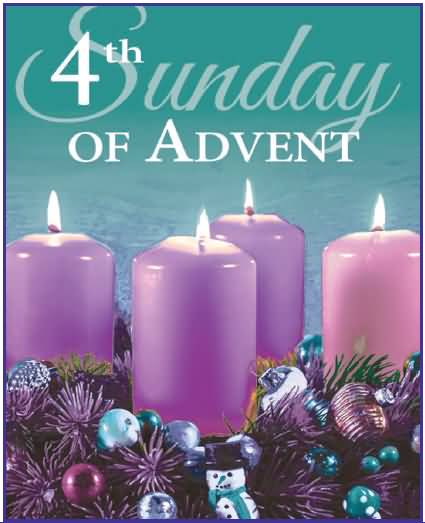
Fourth Sunday of Advent, Year B


2 Samuel 7:1-11,16
Rom 16:25-27
Luke 1:26-38


In the first reading (2 Sam 7), David the great, great grandfather of Jesus, after he had fought and consolidated power in Jerusalem, had wanted to build a house for the Lord, where he could place the Ark of the Covenant, a physical divine presence in the community. David went to bed. But that night, as God would do His things mysteriously, he reverses David’s plan through Nathan, the prophet. God would rather build a house for David. He promised David, an everlasting dynasty. Note, an everlasting dynasty here, is much more than a physical house.

It is an everlasting promise of love, kindness, peace, joy, goodness, good-health of mind and body, faithfulness, acknowledged in the responsorial psalm of today; “forever I will sing the goodness of the Lord… the promise of the lord I will sing forever”!

 In the 2nd reading, Romans 16, Saint Paul testifies to the fulfillment of this promise in the person of Christ, whose Gospel he preaches. Paul says, “to him who can strengthen you, according to my gospel and the proclamation of Jesus Christ, according to the revelation of

12/16/2017

Third Sunday of Advent, Year B


Isaiah 61: 1-4, 8-11
I Thes 5:16-24
John 1:6-8, 19-28.

The Christ We Do Not Know

Today’s passage from the first reading “the Spirit of the Lord is upon me, because the Lord has anointed me; he has sent me to bring glad tidings to the poor, to heal the brokenhearted, to proclaim liberty to the captives and release to the prisoners, to announce a year of favor from the Lord and a day of vindication by our God….” (Isa 61:1-2a)”, often cited by Luke 4:18-21 as the inaugural address of Jesus, gives us joy. It reminds us of the sending of the prophet, the role of the prophets, in this case 3rd Isaiah, the conscience of the people, the defender of the defenseless, protector of the poor, and precursor/source / channel/conduit of joy to the people!

Our mother Mary sings the joy that the birth of her son, Our Lord brings at Christmas, through the Magnificat (Luke 1:46–48, 49–50, 53–54). Think of what Mary had to go through from her immaculate conception, betrothed to Joseph, her mysterious encounter with the Lord, through the Angel Gabriel. Although there were moment of sorrowful mysteries in

12/08/2017

Second Sunday of Advent, Year B

Letting God find Us

Isaiah 40: 1-11
2 Pet 3:8-15
Mark 1:1-8


Today we have the theme of preparation running prominently throughout the readings especially in the First Reading (Isaiah 40:1-5.9-11) and the Gospel Reading (Mark 1:1-8). In the First Reading, God told the prophet Isaiah to comfort His people and to assure them that the period of warfare has ended. This simply means that God is coming back to the people after a period of their separation from him. To this end, the prophet went further to tell the people to prepare for God’s coming.

The aforementioned preparation according to the oracle of the prophet is expected to take place in the form of a road construction: Every valley shall be filled in; every mountain and hill shall be made low; the rugged land shall be made a plain and the rough country made a broad valley. Then the glory of the Lord shall be revealed.” Isaiah was speaking God’s word to Israel, His people who had been driven from their homeland and who were living in captivity in Babylon.  And Isaiah speaks to us as well, in our time.

In physical road construction, three important activities are premeditated: levelling, filling and making plain. Translated to spiritual life, similar activities are recommended. The road is our heart that is now marred by mountains and hills of sin and disobedience otherwise seen as obstacles; the road represents our hearts filled with valleys and potholes of absence of love, knowledge of God and other Christian virtues. The road presents our hearts made rough by the paths we have chosen that simply lead us away from God.

The readings today, urge us to use our religious imagination and look forward to the future with hope, faith, humility, practice of justice, righteousness, pursuit of peace, and courage no matter the challenges that we encounter daily in life. Watchfulness, alertness and some sense of eagerness and urgency for compassion are also required on every believer’s journey!

The Second Reading (2 Peter 3:8-14) builds on the message of  Isaiah.  As a way of preparing for Christmas, it emphasizes devotion, sense of urgency, justice, righteousness and peace. Mark’s Gospel also makes a direct reference to the prophet Isaiah saying, “behold I am sending my messenger ahead of you; he will prepare your way, a voice of one crying out in the desert, prepare the way of the Lord, make straight his paths (Mark 1:3//Isaiah 40:3).

In the case of Mark, John the Baptist is the servant not Isaiah. But what Isaiah announced thousands of years ago is what John the Baptist proclaimed from the desert, during his time. It is the same, but renewed message of preparedness for the Lord, through repentance, baptism, conversion, humility, justice and faith in the one mightier than him!

In a pluralistic world of today, with its various socio-cultural, and political challenges, including threats of war, ISIS, Boko Haram,  terrorism, poverty, the gap between the "haves" and the have-nots," there are still many other ways we can prepare for Christmas. But what have been suggested in today's scriptures are achievable provided we place our faith and trust in God’s fidelity. Once we become fully convinced of God’s faithfulness, then our lives take on a new spirit of hope and optimism, as we prepare for Christmas!

In our world which is, unfortunately, marked by so much craving for material possession, John the Baptist herein recommends detachment from material wealth through his wardrobe and menu. We are told that he wore animal skin for clothing and for his diet he lived on locust and honey (one can observe that the things are not only unusual they are also rare). It is worthwhile to inquire why that aspect of his personality was added in the gospel as if what he wore or ate were very important to his message. In fact, they are not only important they are also part of the message. The recommendation is that we should be modest with material things with which we often get so much saturated and overwhelmed that we have no time and space to prepare the way for the Lord. That was why our Lord would ask us not to worry about food or what we are to wear considering the life of helpless birds (Matt.6:25-26).

The Second Reading (2 Pet.3:8-14) tells us to assume the attitude of waiting but that will be after making the critical spiritual road construction. This form of waiting should not be based on our human way of reckoning time. God’s timing is quite different from our own timing. Often many people fix dates for the time of the coming of the Lord but they have also failed several times. God expects us at this time to be concerned about preparing a way for Him not to come to Bethlehem but into our hearts. We are expected to devote our time and disposition to preparing our mountains of prejudice that still need to be lowered, the deep valleys of poverty that require to be filled in. 

These mountains and valleys exist in our own hearts, homes and neighborhoods.  Advent calls us to be more reliant on God’s providence than on our popular cultures, political affiliations or social status to tell us what is right.  Advent invites us to enter into the desert of our hearts, as it were, and rid our feelings and thoughts of anything that does not flow from God or lead us to God. To go into the desert is to leave behind the normal props of life on which we tend to depend.  Such life props we often find in our jobs, in our relationships and in routine religious practices.  God cannot do much with us as long as we hope and trust in these things as the first things that give meaning to our lives. When the heart is full, no one can come into it, not even God. You have first to let go of what your heart is holding onto before you can embrace God.  This letting go is symbolized by a journey into the barren desert.

In the Bible, the desert has come to be associated with a place of encounter with God.  It was in the desert that the people of Israel met God and learnt the ways of God. It was in the desert that they become God’s own people and the Lord became their God.  But first, they had to give up all the things that make them for the good life that they were enjoying in Egypt: “the fish we used to eat in Egypt for nothing, the cucumbers, the melons, the onions and the garlic” (Num 11;5). Jesus, before, beginning his public ministry, spent forty days and nights in the desert.  It was a time of discovering and deepening his personal relationship with God.  By calling the people into the desert, John was calling them to let go of their false hopes and securities and learn to hope and trust in God alone.

John lived what he preached.  By his lifestyle, his dressing and eating habits, he showed that the meaning of life is not to be found in the abundance of material possessions but in relationship with God. To go into the desert is the first step in true repentance. It means abandoning our usual hiding places and putting ourselves in a situation where God can easily reach us. It is the leveling of those hills and the filling of those valleys that make it difficult for God to reach us and save us. In the season of Advent, the Church extends to us the call of John the Baptist to repent and confess our sins in preparation for the one who is to come.  It is an opportunity to rediscover our total dependence on God. God has made us for Himself as St Augustine discovered and our hearts are restless till, they rest in God. When we realize this and make room for God in our lives then we are on the way to true repentance after the example of John the Baptist.

Advent does not only recall the coming of Jesus 2000 years ago, but more importantly reminds us that Jesus will come again. Will it be this Year? Will it be today? We do not know. While waiting, we must live by faith and do all we can to prepare ourselves and our world for Jesus when he returns to us as promised. Advent is calling us to look to ourselves. Perhaps someone has mistreated us. We were innocent and that person attacked us.  May be it was a parent who constantly belittled us.  May be it was someone at work or at school who really enjoyed making our life difficult. Perhaps it was someone who we barely know who took it upon himself or herself to criticize us. How have we responded? Sadly, many times you and I have responded by matching nastiness with nastiness. How can we expect there to be peace in the world when we respond to hate with hate? If we want the world to change we need to change.

John the Baptist knew that he was striking a chord with people as he saw them responding to his preaching, The Gospel of Luke says that the crowds asked him “what shall we do?” He said, “if you have two cloaks give one to someone who has none.  Share your food with the Hungry.” When the dregs of the Jewish society, the tax collectors sincerely asked him, what shall we do?” He told them to stop cheating people.  Even soldiers asked John what they should do? He responded that they stop bullying people and acting unjustly. John wants to make one thing clear though, that people should not be changing just because they were drawn to his words.  He was merely preparing them for the one whose words would be the words of God. “One mightier that me is coming after me.” “I am not worthy to even take off his shoes. What I do is earth bound.  I am baptizing with water.  What he will do is infinitely beyond the earth. He will baptize with the Holy Spirit.”  Our examination to reform ourselves, to change ourselves so that we can change the world is not merely based on humanitarian needs, but on the spiritual.  We belong to Jesus Christ.  We are His people.  He has called us to make his presence real throughout the world.  For us, love is not merely the opposite of hate. Love is the presence of Jesus Christ within us and among us.  For us, charity is not just the opposite of greed.  Charity is the Lord working through us to care for others.

12/02/2017

First Sunday of Advent, Year B

Isaiah 64:1-9; 1 Cor 1:3-9; Mark 13:24-37.

Keep Awake

Today marks our entrance into the season of Advent and the second cycle of readings. The word Advent means “coming”. In this context it actually depicts the coming of our Lord Jesus Christ seen in two ways: his coming as a new born child (at Christmas), not in the historic Bethlehem but into our hearts and his Second Coming for the final judgement at the recession of the world. They are both future events and that is why we have the WAITING clause attached to Advent. In all, we are meant to wait for the coming of the Lord Jesus Christ in terms of the aforementioned ways. Furthermore, the vehicle for the “waiting,” for the “coming,” is “watching”.
Some years ago there was some breaking news on TV that to me seemed to be a wonderful example of being prepared. The news was about a man who accidentally walked into a store during a robbery. The gunman pointed his pistol at him and ordered him to hand over his money. The man responded calmly, "Go ahead and shoot. I just had my daily Bible passage and said my prayers." The robber was confused by that reaction, and the man walked away. I have to admit that I probably would have handed over my money, but I do admire that man's courage - and above all his apparent readiness to meet the Lord. That is what Jesus tells us today. Be prepared, be alert and watchful. Mark's portrait of the doorman, watching out to open for the Lord whenever he "suddenly" appears is an image of what we are expected to be doing all year long but especially during the season of Advent. The doorman keeps awake in order to recognize and welcome the Lord at his coming. Faith, likewise, transforms us into people who are able to recognize the Lord and willing to receive him. Recognition is crucial because the Lord does not always come in easily recognizable ways. At Bethlehem he came in the form of a baby and people did not recognize him.

Watchfulness is a great virtue. It could also be rendered as vigilance, circumspection, awareness, or attentiveness. When someone is waiting for something, there will be every need for the individual to be watchful or vigilant. This is important because one needs to see or observe what one is waiting for so that when it finally arrives one will not be taken by surprise. There is a tendency to wait and not to watch or be vigilant. There is also the tendency to wait and be watchful on the wrong side or to be distracted from what one is waiting for and attending to some other thing. Generally waiting is not enough, one needs to be watchful, vigilant, aware, circumspect and attentive.

The three readings for this First Sunday of Advent all agree that we should wait for God. In the First Reading (Is. 40:1-5.9-11) the prophet could simply not wait for the coming of God to happen. With heightened anticipation he decried: “O that you would tear the heavens and come down”. This is like saying in our common slang “I can’t wait”. 

The readings, each, redefines this time for us in context. For all Israel’s prophets, including 3rd Isaiah (Isa 63:16b-17, 19b; 64:2-7) this time was known as the “Day of the Lord.” That time, when the Lord accompanied them throughout their journeys and exiles, when they were in trouble of slavery, dryness, starvation,  sin or faced challenges in rebuilding the new community. They placed their hope and trust in God, who comes down, and renders the heavens to save Israel! Israel's dependence in this God is as a child to a father, or a clay in the potter’s hand.

 In psalm 80, Israel is also prayerful, watchful, and hopeful for that time, that day, in that God who will continue to shepherd Israel, smiles divinely at them, protect them, irrigate and prune the vine he had planted, no matter what! Each of us, the Christian community, is that vine the Lord had planted.

Saint Paul  too believes this. In the second reading, while preaching to the despairing Corinthian-Christian community in the early stages of their faith development, affirms,  that hopeful time is the time of our Lord Jesus Christ. The grateful Paul, says to the community:
 I give thanks to my God always on your account for the grace of God bestowed on you in Christ Jesus, that in him you were enriched in every way, with all discourse and all knowledge, as the testimony to Christ was confirmed among you, so that you are not lacking in any spiritual gift as you wait for the revelation of our Lord Jesus Christ” (1 Cor 1:3-9).

In the Gospel, Mark uses Kairos to describe this time of the revelation of our Lord Jesus Christ, to his eager disciples. It is an important time, an appointed time; a quality time (Mark 1:15); a time of fulfilment; the day of the Lord, a time nobody knows (Mark 13:33).  This time can only be handled by faith, watchfulness, being alert, loving our neighbors, forgiving those who have offended us and asking those we have offended for forgiveness, as well as offering services of charity to the poor, and the needy! 

The danger is that, Advent Season and Christmas can come and go without our realizing that “God’s time is the best,” and that God is hidden in every event of our life’s journeys. Like the gatekeeper in the Gospel passage  (Mark 13:34), the Church invites us during this Advent not to remain chronologically static, or be carried away by the media, the politics of the day, the noise, the violence on our streets, the wars and the threats of war. Or even by our own weaknesses and sins, thinking that they are beyond repairs. Our relationship with God can always be repaired, so also the broken relationship with our neighbors.

Sometimes Christians also despair because of the social, political and religious situations in which they find themselves. Some are poor, some are sick, some have lost their loved ones, while some are affected by the HIV epidemics, with health issues while some others are  plagued with  religious fundamentalism/ extremism, injustices, discrimination, racism, and terrible natural disasters.
To the virtue of watchfulness, our Lord added the quality of prayerfulness. Hence he said: “take heed, watch and pray for you do not know when the time will come”. Note that it is not all about watching while waiting but also praying while waiting and watching.  Here we discover that prayer qualifies as an indispensable spiritual component of waiting and watching and also as a very needful phenomenon for our Advent journey. Prayer is a very important key we need to adopt.
It is indeed very pathetic and regrettable that the world has a very unspiritual approach to this period that precedes Christmas. People are already erecting Christmas trees, yuletide jingles are already renting the air but we have to pass through the advent before getting into the Christmas. People simply cannot wait but they have the wrong reasons. Advent is not just the period that leads us to Christmas, it is also a time we are encouraged to prepare for the Second coming of our Lord Jesus Christ. There is need for us to step into the advent attitude of watchful waiting, of giving God priority in all our plans and aspirations. The Advent attitude is that of prayer-fullness, yes. We have to be prayer-full not prayer-less as we watchfully await the coming of the Saviour of the world.
In the Parable of the Last Judgment, which we heard last Sunday, Jesus said He came to people in the form of the most needy and disadvantaged of this world and many did not recognize him. But true people of faith did recognize him and serve him in these people who live in the blind-spot of society. Faith is first a way of seeing, and then a way of living. The "wicked" who were consigned to hell in the Last Judgment were probably waiting for the final coming of the Lord but failed to recognize him in his day-to-day coming. The shocker in that parable is that Christ comes into our lives in the form of the ordinary people and events of our everyday lives. We need to be awake in faith to recognize and serve Him in these commonplace and routine encounters since it will do us no good to recognize Him on the Last Day if we have not recognized and served him day by day.
The implication for us is to put an end to idle speculations regarding the date of the Last Day. Open your eyes in faith to see God present and active in your life and in your world. Open your heart and your house to the Lord who comes to you daily in the form of the needy man or woman. This is the best way to prepare to welcome the Lord when he comes on the Last Day. John F. Kennedy is said to be very fond of a particular story. During his 1960 presidential campaign he often used it to close his speeches. It is the story of Colonel Davenport, Speaker of the Connecticut House of Representatives back in 1789. One day, while the House was in session, the sky of Hartford suddenly grew dark and gloomy. Some of the representatives looked out the windows and thought this was a sign that the end of the world had come. An uproar ensued with the representatives calling for immediate adjournment. But Davenport rose and said, "Gentlemen, the Day of Judgment is either approaching or it is not. If it is not, there is no cause for adjournment. If it is, I choose to be found doing my duty. Therefore, I wish that candles be brought." Candles were brought and the session continued.
In our world today, there are two big mistakes people make with regard to the coming of the Lord. One is to prepare for it with paranoid anxiety. The other is to dismiss it with nonchalant abandon and do nothing about it. What does the gospel tell us about the end of the world and how to prepare for it? The gospel uses two images to make the point that "you do not know on what day your Lord is coming" (Matthew 24:42b). One is the flood which overtook the unprepared people of Noah's time. The other is the analogy of a thief in the night, who always comes unannounced. The Lord's coming and the end of the world as we know it will occur suddenly and unexpectedly. It will come unannounced, springing a surprise on an unsuspecting world. Like a wise householder, therefore, we are urged to be watchful and ready.  In all these, Advent invites us to hope and trust in God’s time, that moment of divine intervention, symbolized in the joys of Christmas!